Why Statewide Partnerships Lead to Stronger Animal Protection
Texas is too large, too diverse and too complex for meaningful animal welfare progress to happen in isolation.
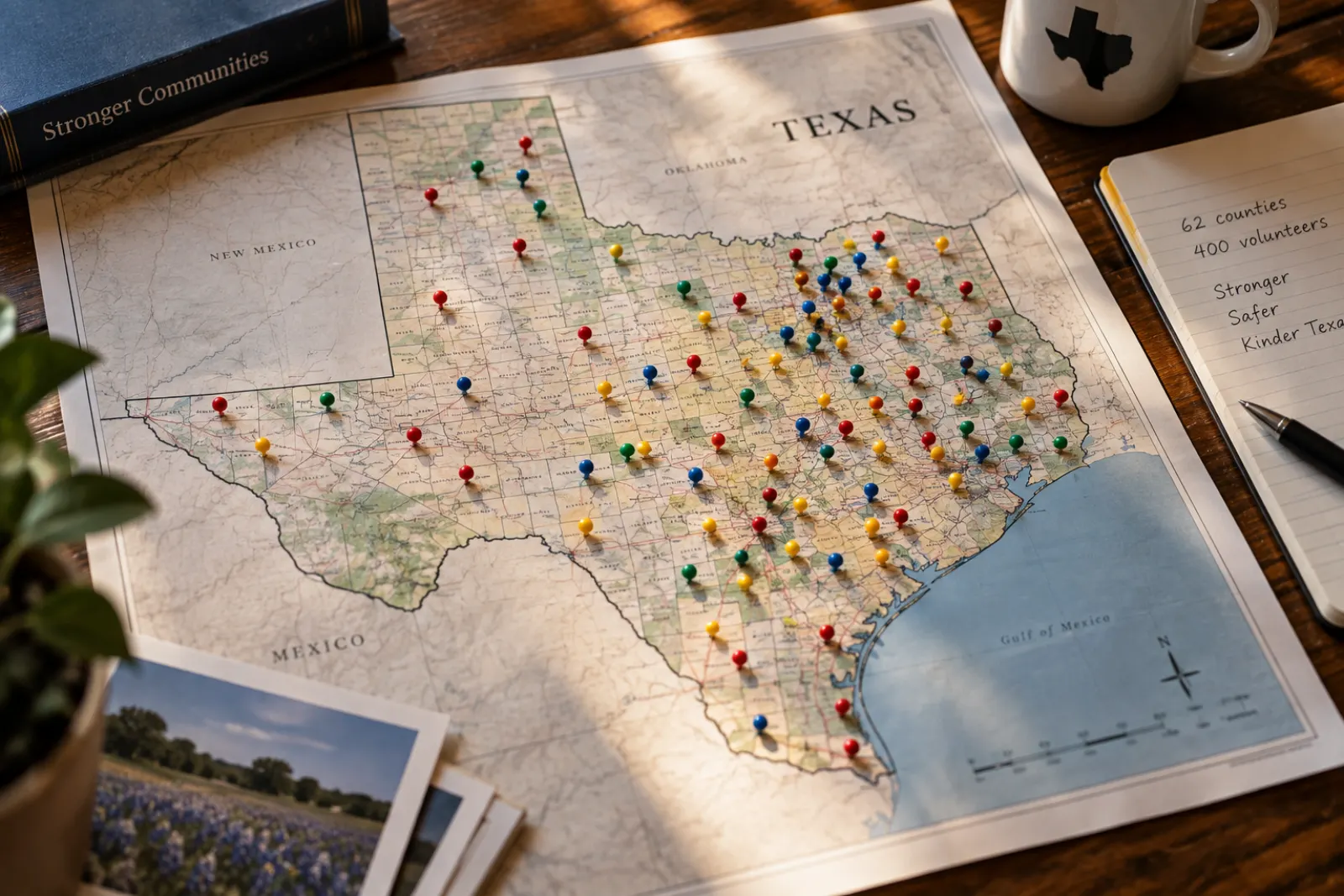
The challenges facing animals in Dallas are not always the same as those facing animals in Austin, Houston, West Texas or a small rural community.
Resources differ. Enforcement differs. Shelter capacity differs. Even the way communities encounter animal welfare problems can be dramatically different.
But the laws passed in Austin can affect all of them.
That is why effective animal advocacy requires more than individual organizations working within their own cities.
It requires a statewide coalition.
Local experience makes better statewide policy
Dallas provides a good example of why local experience matters.
The city’s animal ordinances address everything from animal care and shelter operations to dangerous dogs, adoptions and enforcement. Dallas has also continued to amend those rules as community needs change.
Those experiences create valuable information.
What policies are working? Where is enforcement difficult? What problems repeatedly bring animals into shelters? Where does existing state law leave municipalities with limited options?
When organizations from different Texas communities share what they are seeing, patterns begin to emerge.
A problem that looks local may actually be occurring across the state.
Austin brings another perspective
Austin has its own animal welfare system, including an Animal Advisory Commission that advises Austin City Council and the Travis County Commissioners Court on animal welfare policies and Texas animal-shelter requirements. The commission also specifically works to encourage collaboration among people and organizations involved in animal welfare.
Those kinds of local structures can help identify approaches worth studying elsewhere.
But statewide advocacy should never simply take something that works in one city and assume it will work everywhere.
The strongest policies are informed by many communities.
Coalitions give animals a stronger voice
When lawmakers consider animal welfare legislation, hearing from one organization can be helpful.
Hearing the same concern from shelters, veterinarians, advocates, animal control professionals and communities across Texas is much harder to dismiss.
Coalitions also make legislation better.
Different partners can identify unintended consequences, suggest stronger language, provide evidence and help develop policies that can actually be implemented.
And when it is time for lawmakers to act, those relationships create a network capable of educating Texans and encouraging them to participate.
One state. Many communities. A shared responsibility.
No single organization owns animal welfare in Texas.
Progress belongs to the people willing to work together for it.
For Lone Star Humane Association, coalition building means connecting Dallas-area experience with advocates and organizations across Texas and bringing those perspectives to policymakers in Austin.
Because lasting protection should not depend on which Texas ZIP code an animal happens to live in.
Stronger communities can create stronger laws. Stronger laws can create a more humane Texas.